Graphic Science Education
Updated: 2011-04
This article was written in 2011. It is kept here as an archive — the content is outdated and some links may no longer work.
1. The Historical Context Surrounding Descriptive Geometry
In this section, I will discuss the current state of graphic arts education. (*The content described here is based on the journal Research in Graphic Arts, published by the Society for Graphic Arts, as well as the author’s personal experience. While I acknowledge that some sections may contain a significant degree of subjectivity, I intend to address this explicitly as I present my arguments.)
Descriptive geometry was established based on the descriptive geometry devised by the French mathematician and scientist Gaspard Monge (1746–1818) and was introduced to Japan from the West during the Meiji period.The integration of technical drawing into education was likely heavily influenced by the industrial-driven economy of the period of rapid economic growth. In the early days of manufacturing, production was centered on handicrafts, with a strong emphasis on the experience of artisans. However, as the need for efficient mass production of mechanical structures grew, the importance of design and drafting increased, and drawings came to play a central role.In the past, before the advent of computers and plotters (pen plotters), drawings had to be created by hand. To translate three-dimensional shapes into two-dimensional drawings and to assemble mechanical structures by interpreting those drawings, it was necessary to acquire knowledge in the fields of descriptive geometry and graphic science—methods for interpreting drawings—and to develop the ability to intuitively interpret drawings and three-dimensional shapes.
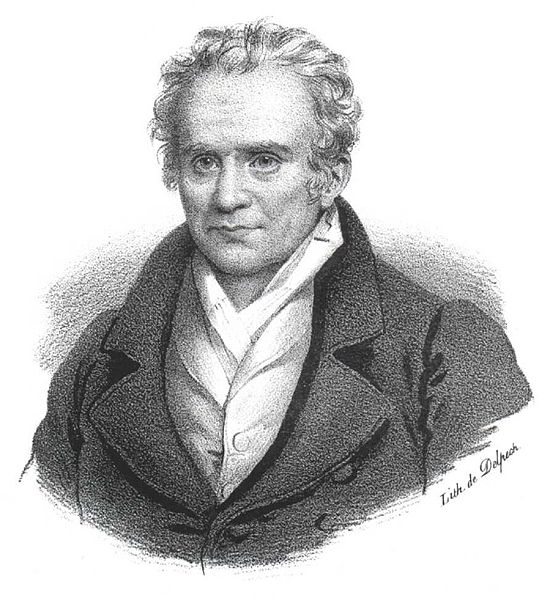
Gaspard Monge
Thus, driven by the strong motivation to enhance national power through the manufacture and sale of industrial products, descriptive geometry was adopted by industrial higher education institutions (universities) as a subject to be studied prior to technical drawing. Furthermore, from the perspective of manufacturing and design education, it was incorporated as the foundation of geometry education in elementary, junior high, and high schools—the preparatory stages for university education.In Japan, a country lacking natural resources, “manufacturing” was of paramount importance, and it is easy to imagine that descriptive geometry occupied a significant position due to the demands of the era.
2. Drafting and Design
Here, I’d like to share my personal experience.
After graduating from a technical high school, my father worked in the drafting department of a company, a profession that used to be called “zuko” in the old days. In fact, we had a drafting table at home back then, and I remember getting scolded for touching it when I was a child. Until the early 20th century, the status of “zuko” in Japan was not very high.Perhaps due to Japan’s hierarchical system, technical artists were unable to advance to the higher-ranking position of engineer. (See the 6th Symposium on Graphic Science Education, Section 3.2: “Japanese ‘Zuko’ and American ‘Draftsmen’”, Kyushu Branch of the Society for Graphic Science.) This situation would eventually change with the times.Around 1990, when I entered high school and was thinking about my future career path, Japan was at the peak of the “bubble” economy—a time when Japanese cars were selling so well that “Japan-bashing” occurred, with Americans even destroying them. By then, the ability to draw technical drawings was viewed as acquiring a skill that would ensure a livelihood for life.
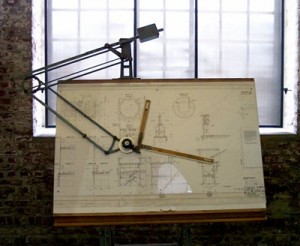
Draftsman (from Wikipedia)
And so, having inherited my father’s belief that he had to give up on attending college due to our family’s financial circumstances, I decided to pursue a path toward a technical university. While my father’s feelings were the underlying reason for my decision to attend a technical university, it wasn’t merely an emotional choice; it also had to do with the limitations of a career in technical drafting.
I mentioned earlier that the importance of design and drafting has grown, but my father’s profession involved doing this drafting by hand, so he was unable to do any actual design work.To engage in mechanical design, one must master approximately five areas of mechanics as part of a general engineering education. These are often referred to as the “Five Forces” (Goriki). At the university I attended, I believe these were Materials Mechanics, Thermodynamics, Fluid Mechanics, Vibration Mechanics, and Mechanical Mechanics (which may also include electromagnetism and friction).Mechanics refers to the physics studied up through high school, and in mechanical engineering departments, students study these diverse fields of physics and mathematics constantly. Mechanical design means designing high-performance products based on these principles of mechanics.
My father, a graduate of a technical high school, was unable to acquire this knowledge and therefore could not secure a job as a designer. Since designers are the ones who actually use technical drawing, I decided to aim for a technical university to become a designer myself, drawing on my father’s experience.
Back then, drafting technicians were highly valued for their craftsmanship in producing precise hand-drawn blueprints. However, today we have moved on to CAD and plotters (pen plotters), or even manufacturing directly from on-screen displays without printing on paper. Furthermore, we have reached a point where, as long as CAD data is available, manufacturing machines can produce parts directly (digital fabrication), meaning that the role of the drafting technician will eventually become obsolete.
3. Is Geometry Unnecessary?
As mentioned earlier, drawing blueprints by hand was the norm at the time, and it is believed that descriptive geometry—the discipline that teaches the methods for constructing such figures—was incorporated into general education from compulsory schooling through university, regardless of whether students were in science or humanities programs, not only for technical drawing but also as part of manufacturing education aimed at enhancing national strength.
However, thanks to the advancements in CAD and computers mentioned earlier, anyone can now easily draw precise geometric figures using computer software. Furthermore, with the development of 3D computer graphics technology, computers can automatically render three-dimensional shapes on a two-dimensional plane and vice versa.While the methods for solving geometric problems established by Monge remain an important field of study for researchers developing computer graphics (CG) and those involved in drafting (such as architects, mechanical designers, and product designers), we are entering an era where, for everyone else, the process from design to manufacturing can take place entirely within the “black box” of a computer without any issues. Just as we have entered an era where calculators suffice even for those who cannot use an abacus at all, this trend is expected to be irreversible.
So, has descriptive geometry—which was once considered essential as a prerequisite for technical drawing education—become unnecessary as a general education course in university education? This has been a topic of debate within the Descriptive Geometry Society for decades. And while traditional researchers in descriptive geometry have repeatedly refuted the arguments against its necessity, which are being raised in various quarters, I do not believe they are approaching this issue objectively, free from emotional bias.Given the major paradigm shift currently underway, educators in descriptive geometry must accept the reality that descriptive geometry—which resembles cryptography—has lost its value as a general education subject.
After studying mechanical design at a technical university, I worked in video production, printing companies, and website development—covering everything from CD-ROMs and DVDs to web design. In particular, in the video industry, I witnessed the shift from the film and tape era to the age of digital editing, and in the printing industry, as a systems administrator, I was directly involved in restructuring processes during the paradigm shift from film plate-making to CTP and on-demand printing.As for my university experience, I moved through the fields of engineering, design engineering, and fine arts, gaining firsthand insight into the differences in thinking that arise from these distinct disciplines. Based on these experiences, I feel that the relevance of traditional drafting education has already disappeared, with the exception of engineering fields.
Let me reiterate: I do not believe that descriptive geometry is entirely unnecessary. I expect it will continue to be required in many specialized fields. However, I feel that it has already lost its significance as part of the general education curriculum for university students as a whole.Descriptive geometry has already fulfilled its primary role, and the geometric methods elucidated by our predecessors are now readily accessible at any time through computer software. I believe there is greater potential in dismantling the traditional framework of descriptive geometry, limiting its inclusion to only certain projection methods and introductory concepts, and instead focusing on learning how to handle diagrams as visual expressions, as well as practical methods for working with 3DCG, CAD, and digital fabrication.
4. Discussion Among Graphic Science Educators
The following materials informed the views discussed above.
Symposium on Graphic Science Education (Kyushu Branch of the Society for Graphic Science, 1989–1996) — held regularly between 1989 and 1996, these proceedings document how graphic science education evolved over that period. The class focuses on the “Summary Discussion” from the 7th symposium and a portion of the 6th.
Descriptive Geometry and Graphic Science Lectures in the Age of 3D-CAD/CG (Hironobu Suzuki, RCAST, The University of Tokyo, 2007)
https://www.jstage.jst.go.jp/article/jsgs1967/41/1/41_1_10/_pdf
Graphic Science Education Centered on Diagram Use in the 3D-CAD/CG Era (Hirotaka Suzuki, Graduate School of Engineering, Osaka City University, 2007)
https://www.jstage.jst.go.jp/article/jsgs1967/41/1/41_1_15/_pdf
CG / Graphic Science Education as Liberal Arts (Yasushi Yamaguchi, Graduate School of Arts and Sciences, The University of Tokyo, 2007)
https://www.jstage.jst.go.jp/article/jsgs1967/41/1/41_1_25/_pdf
Report on the 26th Graphic Science Education Workshop: “CG Education as a Specialized Subject” (Kiichiro Kajiyama, Faculty of Engineering, Fukuoka University; Kenjiro Suzuki, College of Arts and Sciences, The University of Tokyo, 2001)
https://www.jstage.jst.go.jp/article/jsgs1967/35/1/35_1_21/_pdf
Reviewing Graphic Science Education and Course Evaluation (Kiichiro Kajiyama, Journal of Graphic Science of Japan, Special Issue, pp. 68–70, 1997)
What Is the Curriculum Problem? (Kiichiro Kajiyama, Faculty of Engineering, Fukuoka University, 2002)
5. Possibilities of Computer-Based Graphic Science (the 2011 vision)
At the time of writing, this was still under investigation. The plan was to use computers as a supplementary tool for graphic science education — specifically to visualize plane-line intersections and projections in a 3D CG application (Blender, the free option being considered then), to use video material so learners could observe three-dimensional shapes from multiple angles, and to compare ellipse-construction methods (compass-and-ruler, string-and-focus, and so on).
The emphasis was less on mechanically teaching drafting procedures and more on helping learners build an intuition for three-dimensional space itself. Once CAD and 3DCG made precise drafting available to anyone, the meaning of graphic science would shift from “the skill of drawing a figure” toward “the sense of grasping a solid as a space.”
That direction has since fed into the 3DCG/CAD materials and the Bézier-curve and 3D-scanning materials elsewhere on this site.